 Deutsch
  English
  Français

Why the frame does not play a secondary role in rooflights, and why the use of stepped glass and the element construction method pays off.
Whether on a flat, pitched, monopitch or barrel roof, rooflights allow rooms to be flooded evenly with daylight. What I always notice during consultations is that it’s not so much the glass element that gets people talking, but rather the surrounding structure. With modern insulating glass – we use 95 percent triple glazing – there is usually no need to discuss u values. What remains important is how to deal with the many interfaces around the glass. Keywords: insulating frame and insulation frame. In our oecoline elements, a sandwich wood construction is used that is tailored to the specific requirements. In my view, the decisive factor is that the complete roof window element is prefabricated under controlled conditions. It is painted ready for use and already fitted with any cable ducts, for example for ventilation, NRWA or concealed lighting strips (LED), which we also install. Our credo: The more we can prepare in our factory in Lungern, the better the quality and thus also the quality of the on-site interfaces.
Intensive preliminary clarifications, fast construction time
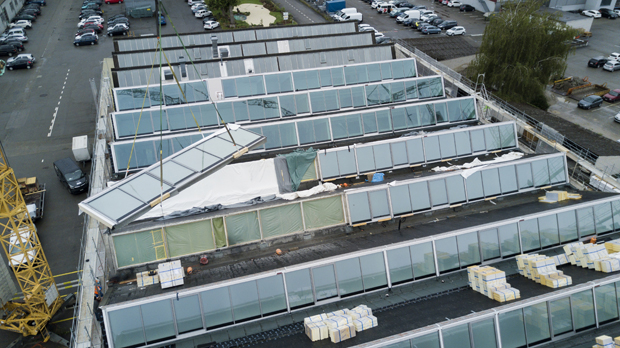
HP Gasser AG specializes mainly in rooflights that deviate from structural standards. The preliminary clarifications are often complex and detailed. In the case of renovation projects, soundings are sometimes even necessary in order to avoid any unpleasant surprises during installation. These are all efforts that are made up for by the fast element construction method during assembly. A case study: As part of the conversion of the Trilapark (formerly Trilacolor) into the “Zofingen Industrial Park”, a thermal refurbishment of the characteristically jagged shed roof (sawtooth roof) became urgent last summer. The old wire glass windows made way for oecoline vario glazing. Preliminary sounding revealed that, for structural reasons, certain concrete girders could not be drilled into because of tension cables. In order to avoid these neuralgic points, the window elements, some of which were up to nine meters long, were designed to be self-supporting in the factory. On the construction site itself, things again went quickly: within six days, the glazed roof superstructures were in place (a total of 700m2). Our assemblers thus managed over 100m2 a day!
Why stepped glass?
This was also one of the reasons that convinced the client and architect. What was required was the work organization consideration for the progress of the interior construction as well as for the tenants who had already moved in (restaurant, dance studio, fabric dealer). To put it simply: the hole that was opened in the roof in the morning had to be closed again in the evening! In addition, the client wanted window elements with stepped glass – something that not many companies offer yet. With this stepless frame construction, rainwater runs off unhindered. This is a significant improvement over the conventional version, where a clamping strip seals the glass and sheet metal, causing standing water that can stain the window or even penetrate the structure.
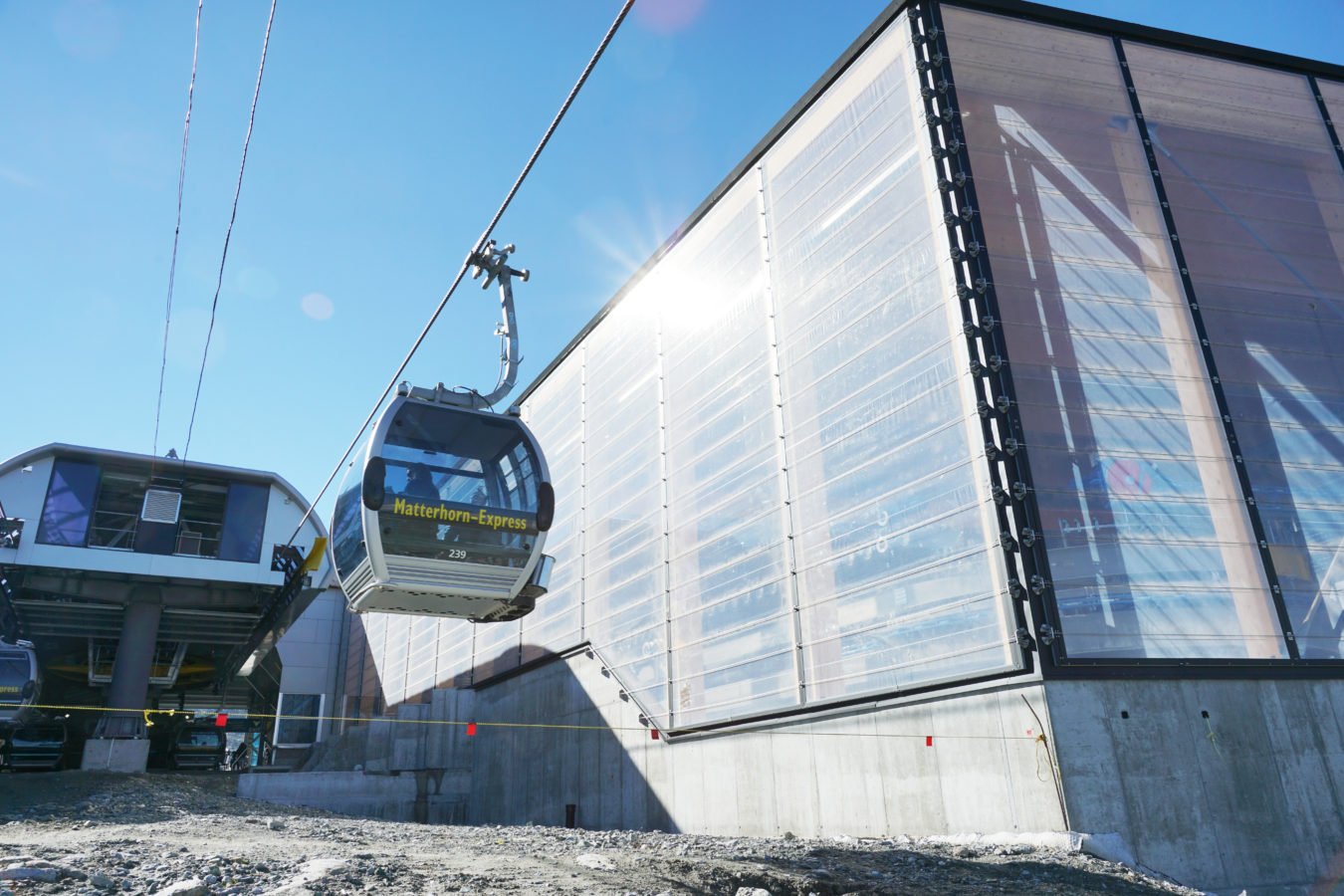
Light, efficient and aesthetic: At almost 3000 meters above sea level, HP Gasser AG from Lungern is cladding the bottom station of the world’s highest 3S railroad with its ETFE facade solution.
It’s a project of superlatives: on the Kleine Matterhorn at Europe’s highest construction site, work is currently feverishly underway to complete the world’s highest three-cable gondola lift (3S). From the end of September, this will transport up to 2000 guests per hour to 3883 meters above sea level on the Trockener Steg – Matterhorn “glacier paradise” route. The journey to the highest mountain railway station in Europe will take nine minutes.Zermatt Bergbahnen AG is investing 52 million Swiss francs in this markedly improved ski area connection between Switzerland and Italy.
No wonder a multitude of specialists are at work on such a project. “A sure value,” as the architect in charge, Hans Zurniwen, puts it, was HP Gasser AG from Lungern. Under challenging conditions, the membrane builders from Obwalden assembled the north and east facades of the Trockener Steg valley station at 2923 meters above sea level within a very short time. According to Zurniwen, “This is no place for experiments. Here, cooperation must work even better than in the valley.”

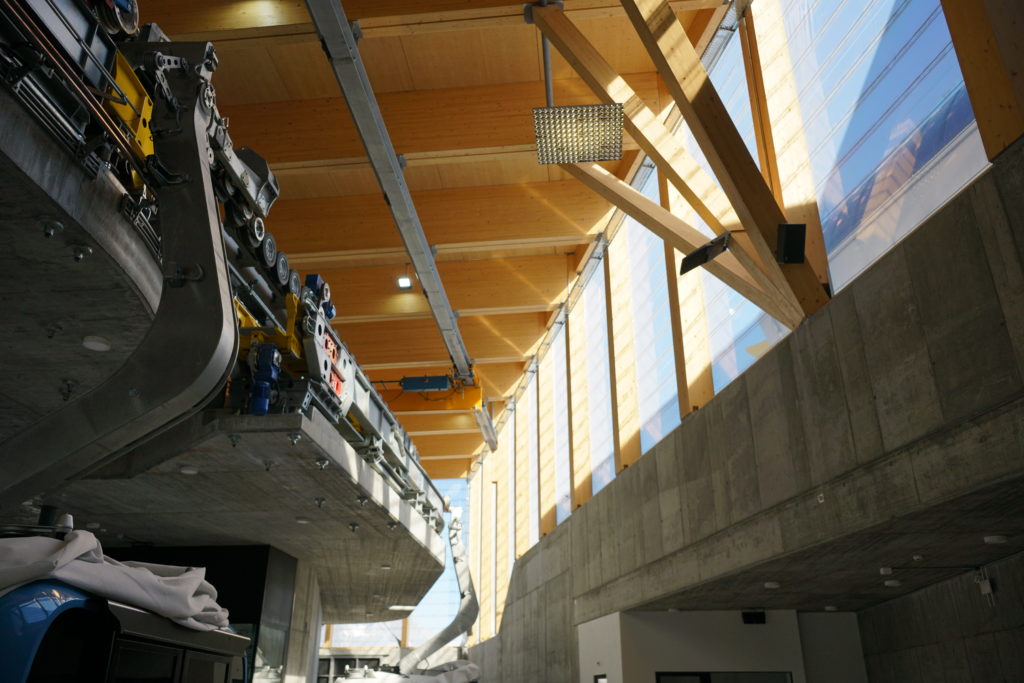
Efficient and lightweight
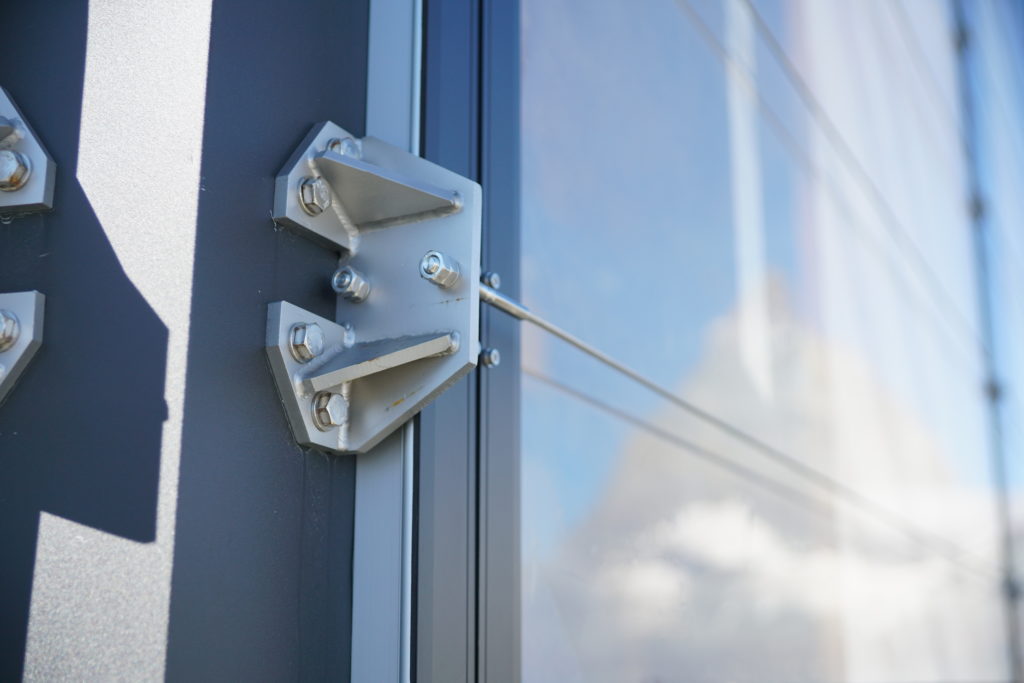
The wooden building by the Zermatt architectural firm arnold/perren/zurniwen is probably unique in this exposure and size. “Not at all the typical steel-and-concrete box,” says Hans Zurniwen, not without pride. And on the facade design: “There’s an insane amount of technology behind the project, which also looks good and is allowed to be shown.” Around 500 square meters of transparent ETFE foil were used – stretched on aluminum profiles and preassembled ready for use. In addition to efficient on-site assembly, the weight of the construction was also a decisive factor: “As soon as you build away from the road, transport is always an issue. Less tonnage means fewer rotations,” Zurniwen refers to the air transport by helicopter.
The detailed solutions were worked out hand in hand with HP Gasser AG during intensive project development, he says. “They always had an open ear for us planners and the client.” For example, the discreet two-rope solution for stabilizing the ETFE foil due to the alpine wind and suction forces was developed. One wire rope on the inside and one on the outside hold the foil in place without making it visually too heavy. All joints and interfaces also had to be sealed to prevent snow. Precision and ingenuity that have already more than proved their worth in the past winter, which was full of snow and storms, as Hans Zurniwen emphasizes. Now the only thing left to do is to wait for the rush of visitors.
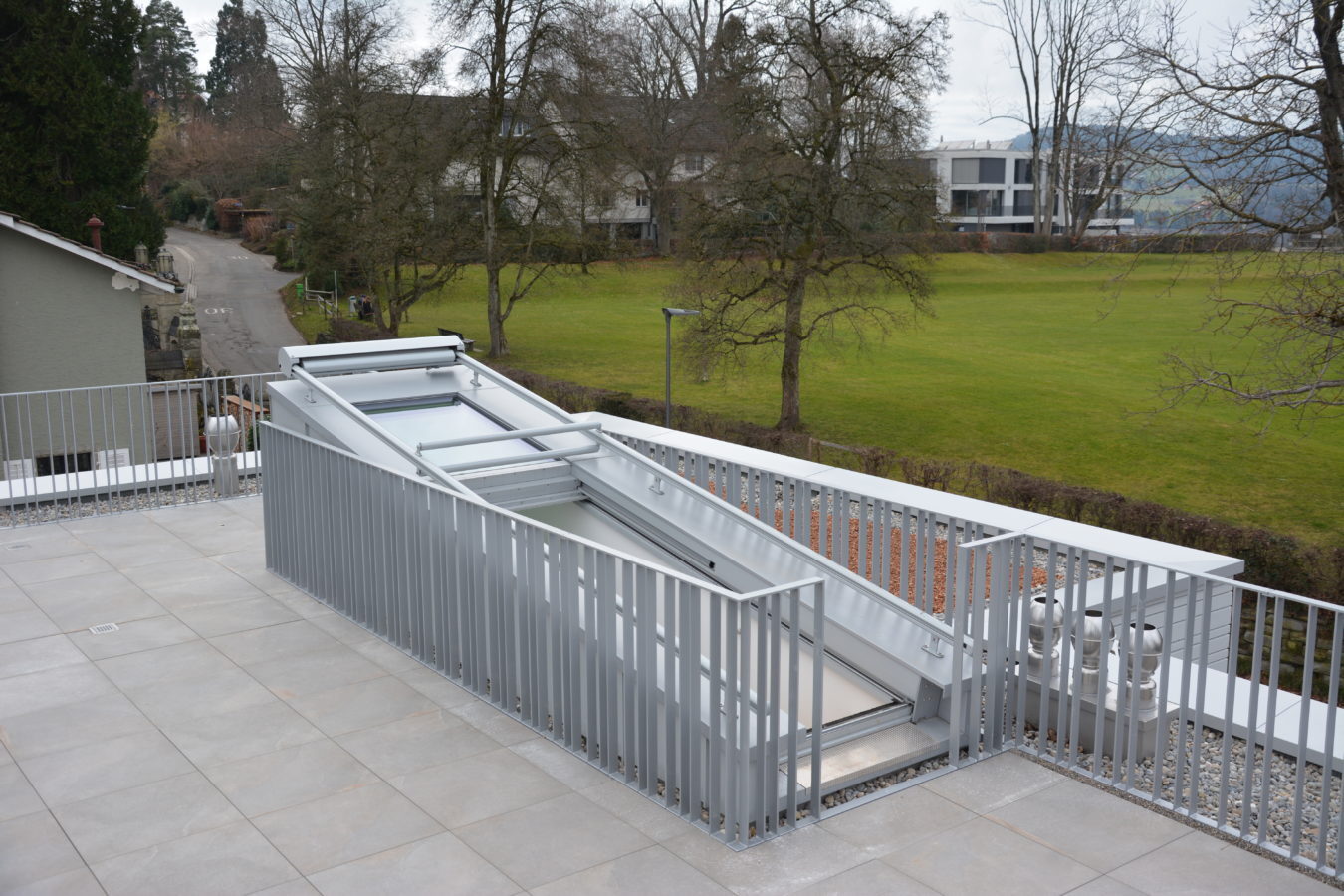
The verasonn® w30 roof exit offers a flexible, space-saving solution for any roof terrace.
The high-quality sliding glass windows can be opened electrically to 2/3 and guarantee a comfortable exit without obstacles. The glasses are available in all known designs. In addition, we offer matching controls and safety devices.
The finished roof exit element with the proven HPG insulating frame was made to the desired dimensions and provided with an external sunshade.
(Single-family house Tigerbergstrasse, St. Gallen)