 Deutsch
  English
  Français



Digitalization is also making steady progress at HP Gasser AG: Since January, all delivered products have been equipped with NFC tags. This means that all products are clearly identifiable and comply with the Construction Products Ordinance (BauPV). The small microchip stickers store production number, time of manufacture and customer. Using an NFC-enabled smartphone or reader terminal, this information can then be retrieved at any time.
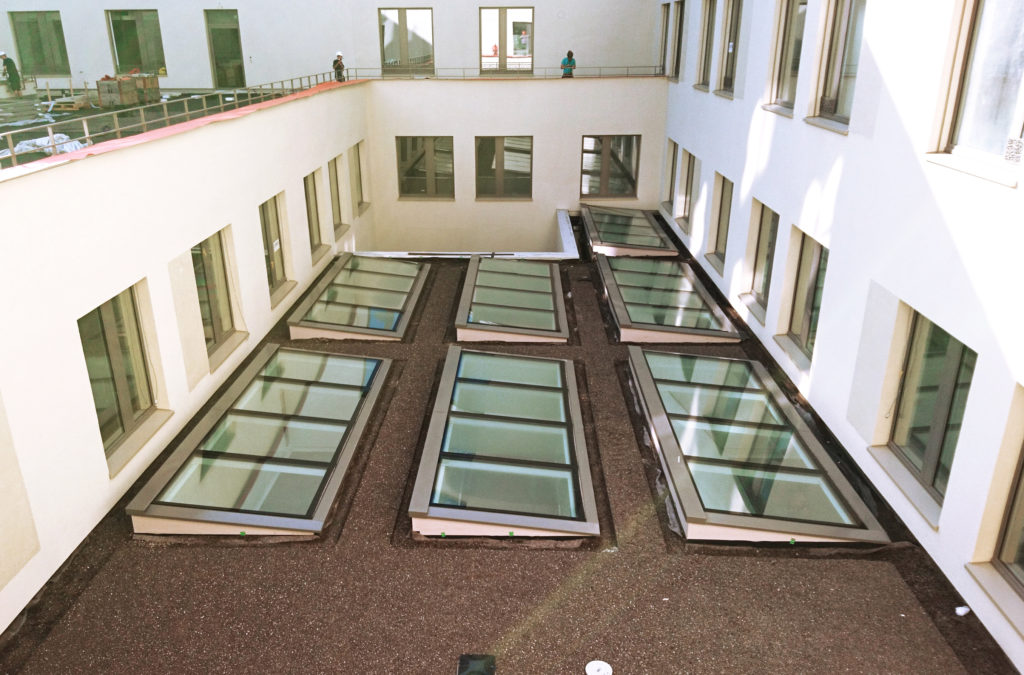
And HP Gasser AG can also do BIM: The abbreviation stands for Building Information Modeling. All relevant data of a building are digitally recorded and modeled (3D). Particularly in large projects, this approach ensures more efficient processes, not least in the coordination of the companies involved. We have gained initial positive experience with this approach during the installation of roof lights in the Felix Platter Hospital in Basel.

Interview with Hanspeter Gasser
Hanspeter Gasser, HP Gasser AG stands for Swiss quality craftsmanship, state-of-the-art technology and a spirit of innovation. What are the latest innovations in roof windows?
The invisible window and the space gain through roof modules are the latest innovations. In addition, we have special elements for areas above 700 meters above sea level, where a lot of snowfall is to be expected in winter. Furthermore, we offer our customers specially insulated roof egresses for flat roofs.
With the Schlossmattli project in Giswil, your company demonstrated the innovative spirit I mentioned. What made these roof windows so special?
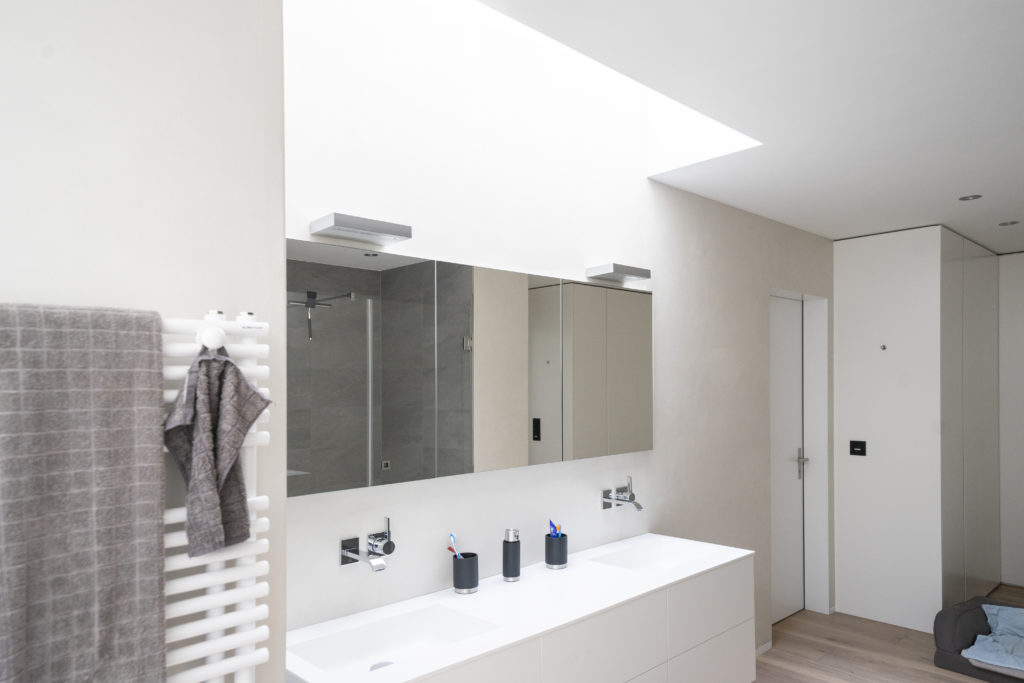
The customer may wish the size of the roof window. In this project, for example, this was that the footprint of the bathtub is exactly the size of the roof cutout, and therefore the glazing. Thus, in the bathtub you can look at the sky. The walls go seamlessly to below the glass pane. These large glass panes are approved only because a special fabric is fixed over the glass on the outside. It is a fabric, thanks to which one can see through from the inside and almost does not notice the fabric. Moreover, from the outside, the glass pane is only slightly visible, and the fabric makes it possible to prevent reflection. With this unique solution, it is possible to work on roofs with large glass panes, without noticing them because of the reflection.
What do your current projects look like?
We are always guided by the customer’s wishes, which is why all our projects are very different. Since we deal with our customers’ wishes on a daily basis, we are absolute experts when it comes to roof windows. It doesn’t matter whether it’s steep or flat roofs.


What is the best way to integrate a roof window into a roof?
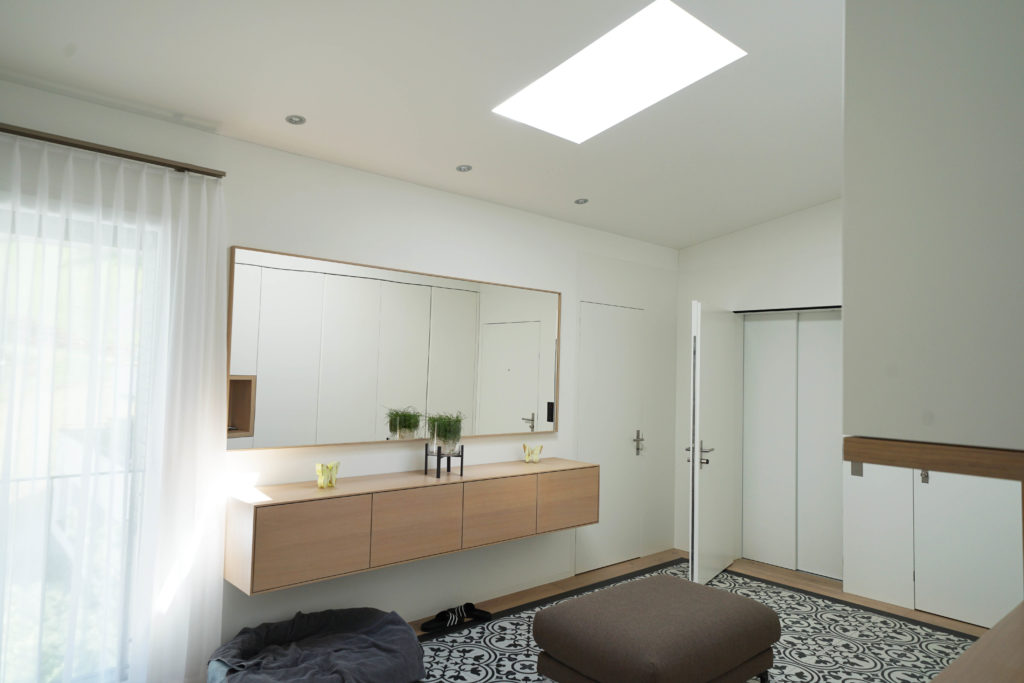
We have a team of about 70 people working in our company. Four to five employees plan the optimal installation of roof windows for our customers. Under the slogan “Light into the roof” we plan windows for the flat roof as well as the pitched roof. These do not always have to be roof windows. Rather, it is about modules that are visually attractive from the inside, for example, frameless. The entire assembly of vapor barrier, insulation, sub-roof or flat roof connection and sheeting also plays an important role. In addition, the statics and building physics of large elements must be taken into account.
Ever larger windows should allow more and more daylight into one’s own four walls. Where do you see the biggest challenges for HP Gasser AG?
With the size of the elements, especially the effort in consulting and logistics increases. However, HP Gasser is not only responsible for the delivery of the roof windows, but these must also be developed to meet the building physics
requirements. In addition, the desired volume gain through roof windows also brings with it some challenges. Because: The greater this volume gain, the greater the challenge.
How does your company ensure that your windows allow the desired light transmission while providing glare and heat protection?
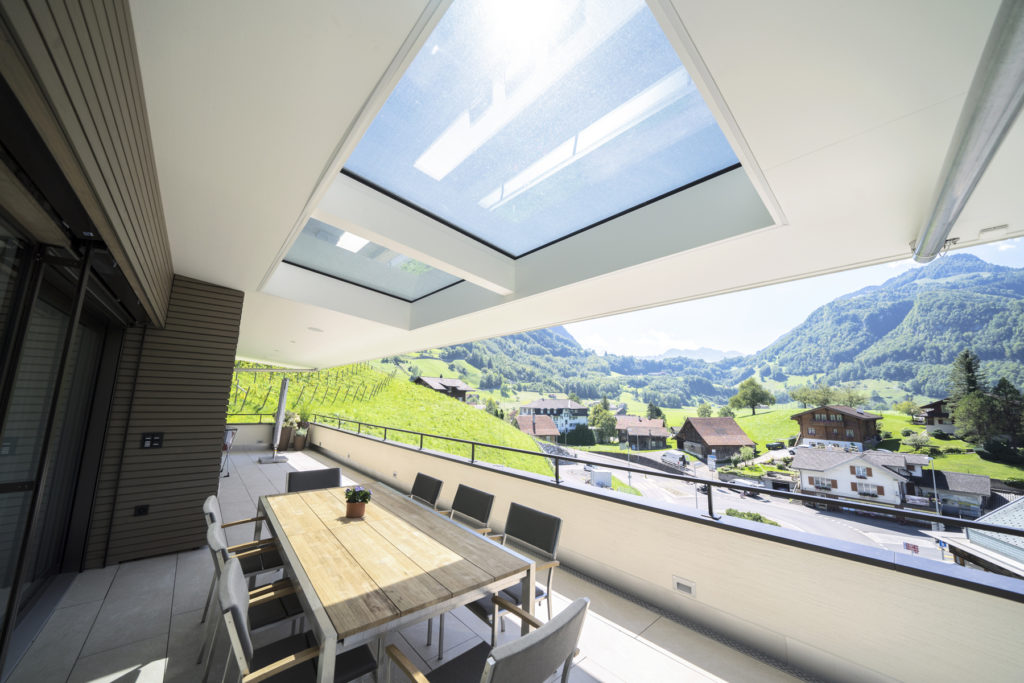
Compared to a facade window, a roof window brings 30 percent more light into the living space. Together with our competent partners, we ensure that only high-quality glazing and procurement systems are used.
What are the trends in roof windows?
The demands of roof windows are increasing due to climate change as well as changing energy regulations and are thus moving away from standard solutions to object-specific special solutions. The building elements and visual expectations are increasing. One wants to create a pleasant atmosphere and more volume with a roof window.
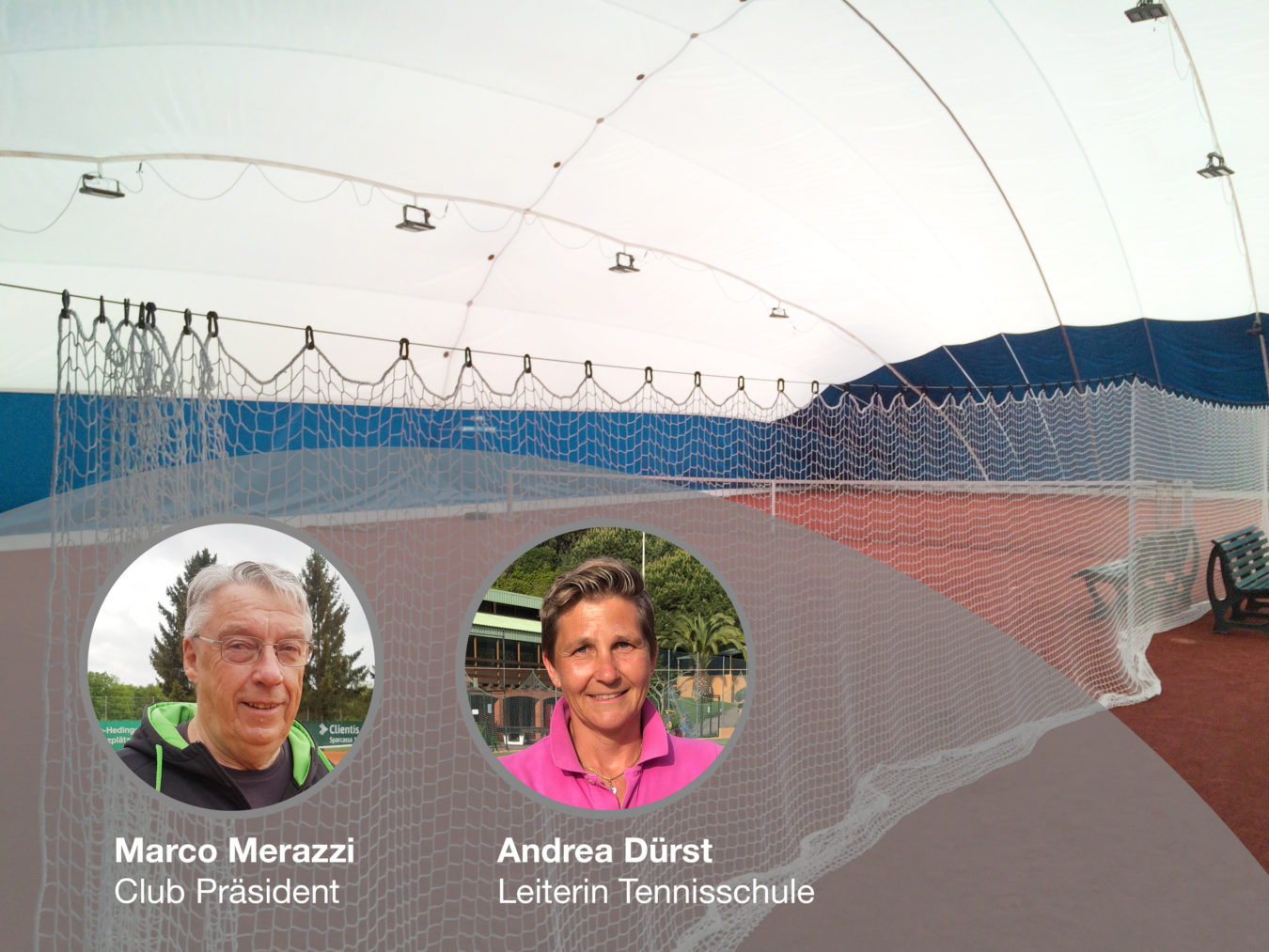
The dismantling of the two airdomes of TC Wettswil is imminent. Club president Marco Merazzi and Andrea Dürst, head of the tennis school, talk about their experiences in a short interview.
Mr. Merazzi, measured by the investments, tennis seems to enjoy a high status in Wettswil am Albis.
Marco Merazzi: Yes, but that was not always the case. The boom started a few years ago with the foundation of our own tennis school with full-time coaches. Within a very short time, our junior section more than doubled in size. Today we have 560 active members, 200 of which are juniors. In “Kids Tennis” we are even number one in the Zurich regional association. We are now taking this development into account with a new clubhouse, two new air domes and a total of six all-weather courts.
Why did you choose air domes and HP Gasser AG?
Marco Merazzi: Our facility is idyllically located in the Ättenberg, in the middle of forest and meadows. It should stay that way. That’s why we play open-air tennis on Swiss Court courts in the summer and then on four courts under a heated indoor roof in the winter. Of course, we knocked on the door of several airdome providers in advance, including abroad. Despite cheaper offers, we decided to go the safe route with HP Gasser AG, a strong partner from Switzerland.
Ms. Dürst, you are responsible for the operation of the facility. What is your verdict after the first winter season?
Andrea Dürst: It was awesome! Especially for the kids, who can now train in the village even in winter. The indoor climate is pleasant and the heating effort could be optimized continuously thanks to the active support of HP Gasser AG. The control technology is also very easy to operate, even via smartphone app. For emergencies, we even have a 24-hour hotline at our disposal. What we underestimated as an association is the organizational effort. With year-round operation, we have become a small company. That can no longer be managed with volunteer labor.
Speaking of effort: How do you manage the set-up and dismantling of the halls?
Andrea Dürst: Apart from certain preparatory and follow-up work, this is practically a matter of course. The assembly and dismantling as well as the intermediate storage are the responsibility of HP Gasser AG. The work takes one day each.
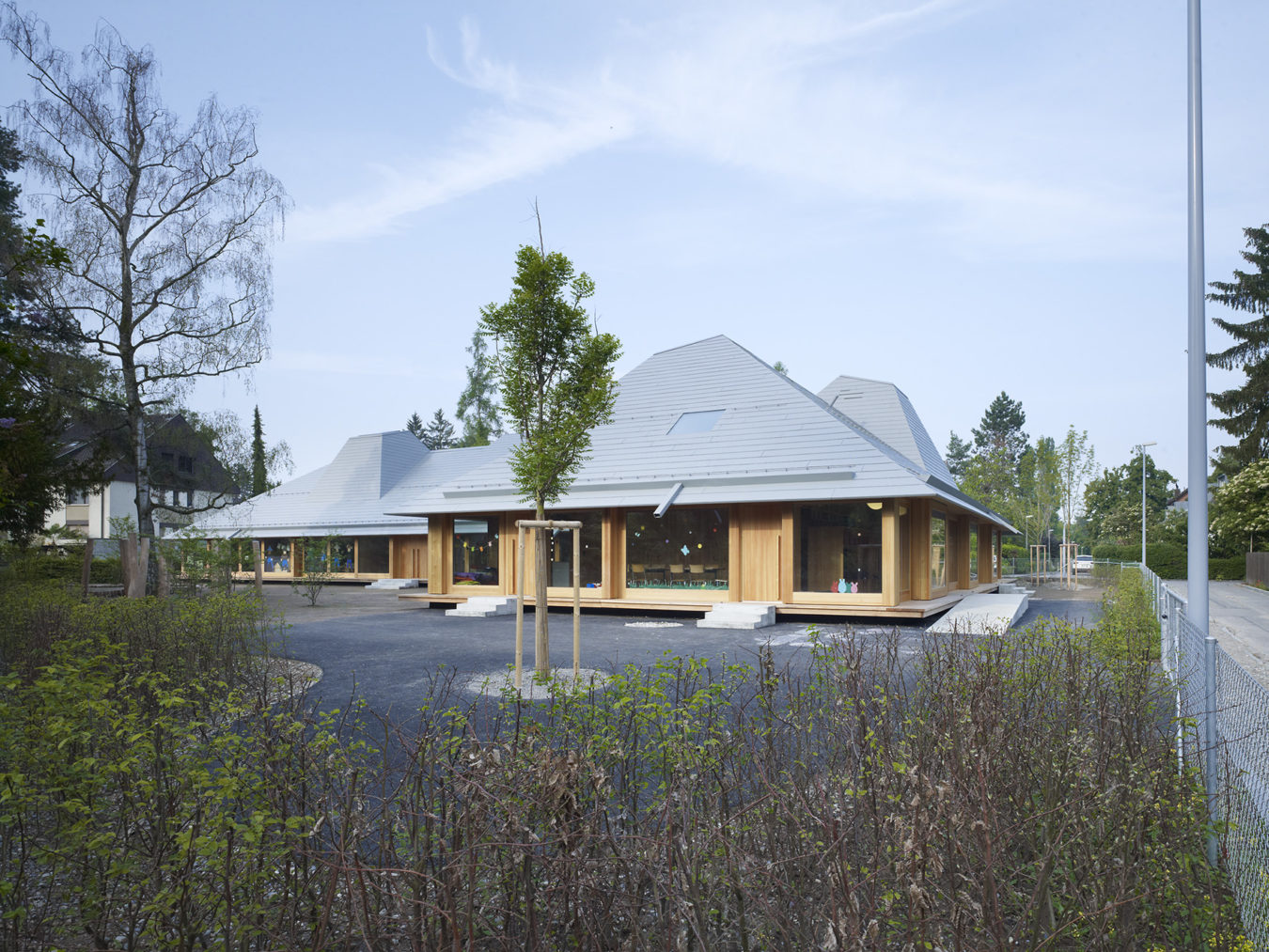
The roof structure of the kindergarden in Riehen has it all: It is unequally inclined on all sides, like a pyramid whose peak has been trimmed with a slight slope. The task of HP Gasser AG was to design and install suitable roof lights for the trapezoidal openings. And all this without on-site dimensional control! The planning on the computer with 3D models was correspondingly challenging. State-of-the-art CNC technology made it possible to cut the construction parts precisely. The viewer notices little of this finesse: Neither window frames, window sashes nor the motors for the ventilation are visible to him.


Architects: Miller & Maranta AG, Basel
Photographer: Ruedi Walti, Basel